

We’re going commando – 75% off for 48 hours only!
Posted on June 16th, 2010 by Angelo | Linked in Promotions
ATTENTION.
It’s time to rally the troops and help us rescue all of the stranded people who are not happy with their current web hosting providers as we go commando and launch an all-out 48-hour assault against bad service.
If you know of anyone who may be in this position (it may even be you), you can throw them a lifeline by letting them know that they do have a choice, and if they decide to make the swap within the next 48 hours, we’ll give them a MASSIVE 75% off their first invoice (on selected plans)!
This offer will be available only between 0:01 AEST Wednesday June 16 through to 23:59 AEST Thursday June 17 using the coupon code SAVEME75
Please note: This offer is only available to new customers or existing customers purchasing new services. Not available for existing plan upgrades.
For more information on this special and to report to your squadron leader (Yes, I promise I’ll never try a pun like that again), please refer to our forum post online at https://forums.ventraip.com.au/showthread.php?t=3251

New technology is coming to VentraIP
Posted on June 15th, 2010 by Cheyne | Linked in Announcements
For discussion, please refer to our forum post online at https://forums.ventraip.com.au/showthread.php?t=3245
As we have seen over the last twenty years, technology has become a very important part of everyday life for most people, most businesses, and most governments. It’s important for some people to keep up to date with the latest gadgets that promise to make our lives easier to manage, or help us to run our businesses better, which is why VentraIP is firmly focussed on the practical future of technology in the web hosting industry.
Technology has a way of making its name not only by what it can do in its first run, but by being adapted and having a second or third life in some form or another.
Take the iPhone as a classic example. The mobile phone has been a part of mainstream life for the good part of the last fifteen years, but in the last three years we’ve seen a device which, even its creators say, is not as “feature rich” as some of the first run Nokia smart phones release in 2002, such as the Nokia 7650.
The Nokia 7650 had everything that was new and innovative for a mobile phone of its time, such as a colour screen, a camera, an email client, internet access, MMS messaging and voice commands, but when the iPhone was first released five years later in 2007 it didn’t even have all of those features, yet it was marvelled as a “revolution” and now more than fifty-million units have been sold worldwide.
But even today, the latest incarnation of the iPhone falls well short of the technical specifications of other mobile devices on the market, yet it’s still a license for Apple to print its own money, and that’s simply because it does the job, and it does it reasonably well.
Technology in the web hosting industry is very similar to what I’ve described above. New advances are made, brands are developed, but at the end of the day it comes down to the raw technical specifications and getting the job done.
There are many people in the industry who have pledged their allegiance to certain brands, such as Dell, HP and IBM, but like people who use iPhones, they’ll often wait long periods of time, sometimes years, for their favourite vendor to release new technology that may already be elapsed in the mainstream.
What these people tend to forget is that when you look under the hood of a brand name server, all you’re seeing is stock standard parts that can be purchased at any good online computer retailer. An Intel Xeon E5410 quad-core processor is built to the manufacturer’s specifications (which in this case is Intel), and is exactly the same regardless of where or who you buy it from, as is a Seagate Barracuda 500GB hard drive or a Kingston 2GB DDR-2 memory chip.
The only real difference is the support. In most cases, you would be crazy not to purchase a support option where you can have hardware replaced within a set timeframe, but as a person who has not only worked for two companies who have had such support contracts but also seen how these vendors have failed to honour them with replacement parts within the given timeframe on more than one occasion (in fact, on every occasion), I can tell you without a doubt that it’s just money down the drain.
When this business was started (before I was the owner) and I was asked my professional opinion on what hardware should be used, I looked around for what other companies both locally and overseas were using, and I found that many companies had already started moving to “black box” server hardware.
This allowed us to start with the latest in technology at the time, such as DDR2-800 memory and quad core CPU’s, and at a price point which was 50% less than the same configuration of a branded server.
We’ve had an exceptionally good run in terms of hardware (touch wood), which has only seen one change in “generation” since the first used two years ago, and yet even our first generation is still considered to be current technology in terms of what is on offer today as a standard configuration from the big brands.
We are now taking a big step forward by testing new configurations and multiple pieces of new hardware that will bring our hosting platforms to a whole new level, a level our competitors will have trouble keeping up with while staying loyal to their brands. While I can’t tell you about everything we’ve got on the test bench, I am going to share a few of pieces of technology that we think are very important.
Intel Six-Core X5660 2.80GHz Processor
This is a processor that means business. Consisting of six 2.80GHz cores and Intel Hyper-Threading technology allowing for twelve concurrent threads, 6.4GT/s and 12MB of smart cache. Our existing processors are quad-core with hyper-threading for eight concurrent threads, 2.8GT/s and 8MB of L3 cache.
ASUS RS704D-E6/PS4 Server Chassis
At first glance, this chassis won’t appear to be much different to any other 1RU chassis with multiple drive bays, but if you look a little close you’ll see that from the middle out it’s an exact copy of itself – and that’s exactly what it’s like on the inside. This 1RU beast is not one, but two physical servers in the one chassis.

Some of you might say that a blade system is similar and can do more, but as I’ve previously noted about blade systems, not only are they extremely costly for what they are, but their I/O backbone is somewhat limited and, once exhausted, you’re at the end of your rope.
This chassis has two dual CPU nodes with independent power supplies that can be loaded with twelve physical cores (or twenty-four threads), 96GB of DDR3 memory and four hard drives for an uncongested RAID5 array – a total of twenty-four physical cores (or forty-eight threads), 192GB of DDR3 memory and eight hard drive bays on independent I/O channels.
Not only does it save on rack space and power, but it will sink just about anything you put near it, especially if it were configured to its maximum capacity.
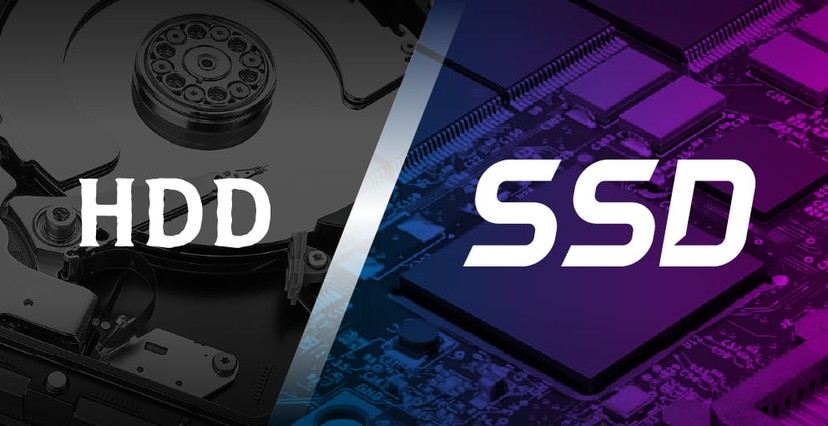
SSD (Solid State Disk) and SATA3 Hard Drives
There has been a lot of talk lately about hard drive speed, and it’s a good thing because for such a long time it’s been going stagnant. The progression of hard drive speeds from IDE, SCSI, SATA and SAS has seen a big jump in both drive size and access speeds, but SSD’s and SATA3 drives will soon change the landscape once again.
SSD is a relatively new technology in terms of mass storage, and while it still has a good way to come in terms of overall reliability (simply due to the nature of the storage), it already has many uses and offers blistering speeds compared to traditional SATA disks. Having no moving parts gives the technology a seemingly unfair advantage over the competition, but every memory manufacturer seems to have jumped on the SSD bandwagon which should result in big leaps for this technology in short periods of time, and prices coming down very quickly.
SATA3 is starting to come to form, with the first drive to hit the market earlier this year being the Seagate Barracuda XT. While they still spin at 7,200RPM, peak data transfer rates in real world testing has shown throughput of around 586MB/s, compared to 288MB/s of a SATA2 drive.
So the next question you’ll most likely be asking yourself is “which of these technologies will VentraIP be deploying?” with the answer being mostly likely all of them.
We have been using SSD hard drives in our internal development machines for close to a year now, which have proven to be reliable and exceptionally speedy (watching CentOS boot with one of these drives gives you a clear indicator of the difference).
While I can’t be certain exactly what combination of hardware will feature in our next generation of hardware configuration that will be deployed in Q4 of this year, you can be assured that all of these new technologies will play a role in forming it and setting the stage for shared hosting nodes with more CPU power, memory and faster disk access.
Over the coming weeks our first node featuring this new technology will be deployed in Melbourne, and we will be asking for customers who wish to trial this new platform for free, so keep an eye out for that.

Clarification on BPAY payments
Posted on June 10th, 2010 by Angelo | Linked in Announcements, Other
This has been cross-posted on our forums at https://forums.ventraip.com.au/showthread.php?t=3232.
We’ve had a number of questions this week from customers regarding payments made by BPAY, so we thought it would be best to have an answer that everybody can see and reference if needed.
We treat BPAY payments with great care, simply because there is generally some period of time between the customer making the payment and the payment being reported in our daily statement from our bank.
The daily report which every bank sends to BPAY merchants (in this case us) contains the following information for every payment:
Customer Reference Number: This is the reference number the customer used when making the payment, which for us is the invoice number plus an additional check digit.
Payment Amount: The amount that was paid.
Transaction Date: The exact date the customer made the payment with their financial institution.
Transaction Time: The exact time the customer made the payment with their financial institution.
Payment Method: The type of account from where the payment came from. In our case this is always “Debit Account”, as we don’t accept BPAY payments from credit card accounts.
Institution Name: The name of the bank or financial institution where the customer made the payment.
Receipt Number: The receipt number the customer’s financial institution gave them when they made the payment.
In some cases, a customer can make a payment and it can take two, three, even four days for it to appear in our daily statement.
However, as you can see above, it tells us the exact time and date that the payment was made by the customer, so in the event of a late fee being applied to an invoice, or a service being suspended, we can always verify exactly when the payment was made, and react accordingly.
If we can see a payment was made on or before the date a late payment fee was applied to the invoice, our team automatically remove the late payment fee from the invoice before applying the payment. This is just common sense!
Regardless of your payment method, if you are experiencing any problems paying an invoice, please submit an eTicket through VIPControl to our billing department and our team will be happy to work out a payment arrangement with you.

Sick of your current web host? Make your hosting easy with VentraIP!
Posted on April 27th, 2010 by Angelo | Linked in Announcements
This has been cross-posted on our forums at https://forums.ventraip.com.au/showthread.php?t=3028.
Sick of your current webhost? Does the downtime, unreliable service and horrible support make you feel ill? Get 50% off your first invoice, and finally make your hosting easy with VentraIP!
This offer is extended to new or existing customers wishing to take out a new service with us, on our Economy, Business or Reseller web hosting plans.
Simply enter coupon code VIP50 when placing your order (remember to click ‘Validate’ ). Why not maximise your savings by pre-paying 12 or 24 months in advance?

Posted on April 3rd, 2010 by Cheyne | Linked in Opinion
If you’ve recently been wondering about the state of the Virtual Private Server (VPS) segment of the Australian web hosting industry, then don’t worry, you’re not alone.
We’ve watched with amusement as more and more “budget” VPS services flood the market, offering everything for next to nothing, while at the same time watching customers come to us on Live Chat or eTicket asking when our Xen VPS services will be available again, as they’re annoyed with the speed of the service, constant high loads, disk I/O problems, or just issues with customer service in general.
The idea behind server virtualisation is actually a good one, but it was never designed to be an oversold platform for cheap containers. In fact, it was designed to make use of under-utilised servers where CPU time and memory otherwise went begging, thereby getting more “bang for your buck” from one server.
The problem with cheap VPS’s is the price. As we found with our Deal of the Decade shared web hosting plans, price is generally a deal maker, but when you’re talking about cheap VPS’s you need to be able to cram in dozens of containers on to the one server (or blade) to make it even come close to turning a profit, and therein lies the problem. A virtual private server should be exactly that, a private server where it looks and feels like nobody else exists, but when you’re cramming 30+ VPS’s on to the one hardware node, you’re going to have issues… eventually.
There are two good examples in the Australian market that I would draw your attention to.
The first is that of Crucial Paradigm. Beside the fact that they still advertise their VPS offering as a “cloud” service (when they tell you it’s not technically a cloud service, but just a marketing slogan), but during a recent hardware failure on one of their VPS nodes, they said they have around 35 VPS’s on each hardware node.
This means at any given time, up to 35 VPS’s can be competing for CPU time, memory and disk I/O, and network access on the one shared ethernet port. On top of this, they have persisted in using HyperVM, a platform for managing virtual servers, even after it was exploited in June 2009 which resulted in over 100,000 websites being wiped out and the owner and founder of the company tragically committing suicide, leaving the project in dire straits.
The second example is Jumba. When you choose to run a virtual server container (VMware), with a virtual server platform (Virtuozzo) to provision VPS’s, automatically the alarm bells ring. Virtuozzo may be the “best value virtualisation platform”, but it’s also one of the most clunkiest and restrictive platforms available.
The trouble is that it’s not a true hardware-based virtual platform, it’s a full software virtual platform that simply emulates hardware, which requires special kernels made by Parallels in order to operate correctly. This causes problems for many users, as the kernels are often many versions behind the “current” release versions of kernels which may be a security risk, in addition to many core features that are missing and unable to be included (until recently, iptables was extremely difficult to operate in a Virtuozzo container).
They are also spruiking the benefits of their IBM blade hardware and 48GB of DDR2-533 memory. Ignoring the fact that DDR2-533 memory is quite old in the grand scheme of technology in 2010, knowing the operators as well as I do, you can be assured that every megabyte of that 48GB will be used.
Going by what most people are saying on their forums and on Whirlpool, most are choosing the “Vegetarian” option which gives them 512MB of RAM, meaning they plan to squeeze around 90+ VPS’s on the one blade! Even if we discount down to 60 VPS’s on the one blade (to allow for a couple of the other menu items), that becomes 60 VPS’s all clawing for CPU time and memory I/O, not to mention the fibre channel disk I/O – but remember, this is just one blade of up to fourteen in the one chassis, all sharing the same fibre channel disk I/O. And because the disk space allocations are so low, the fact that the SAN is running 15,000RPM SAS drives becomes completely irrelevant, as one hard drive could be seeking data for up to 20 VPS’s at any one time.
And on top of this, we haven’t even began to touch on the economics of either example. Our first example would be outlaying around $10,000 for each of their nodes based on the advertised configuration, for a $1,400 per month return, not taking in to account network, co-location and support costs. While our second example has shelled out around $150,000 for their hardware, which is why you can expect them to cram as many customers per blade as possible, as even 60 customers on the base plan only brings $597 per month in to the till, which wouldn’t even cover the cost of it’s share of the monthly repayment, let alone network, co-location or support costs.
While I sincerely wish both of these companies all the best in their endeavors, I will admit to being concerned about how customers see this type of offering without fully understanding the impact it could potentially have on both their service, and the market in general.
The great thing for us is that no sooner do we provision new VPS hardware nodes they are full, and with a waiting list of more than 40 customers, we know that our service, a true hardware-based Xen virtual server environment that doesn’t oversell CPU time or memory I/O, is still a drawcard for us.
We just need to make sure customers are better aware of the different types and levels of service available, and that when they are looking for a VPS solution, they compare apples with apples, and not lemons.

Announcements (5)
Opinion (3)
Other (1)
Promotions (2)
About Us | Terms and Conditions | Acceptable Use Policy | Service Level Agreement | Privacy Policy | Contact Us
© 2010 VentraIP Group (Australia) Pty Ltd